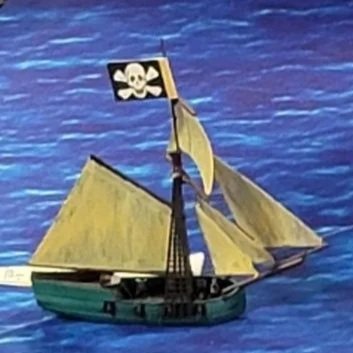
2-Gun Privateer Gaff rigged Schooner
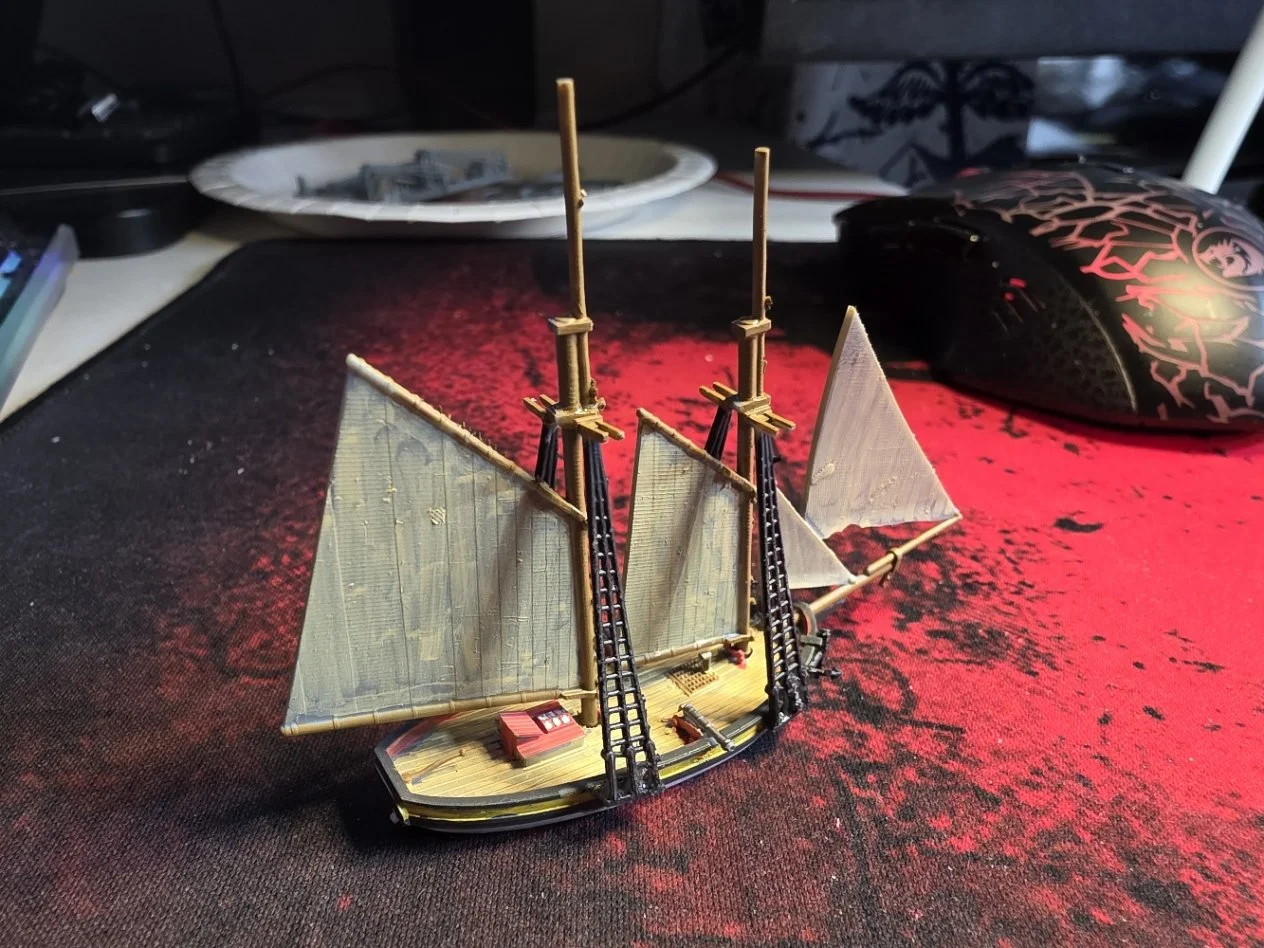
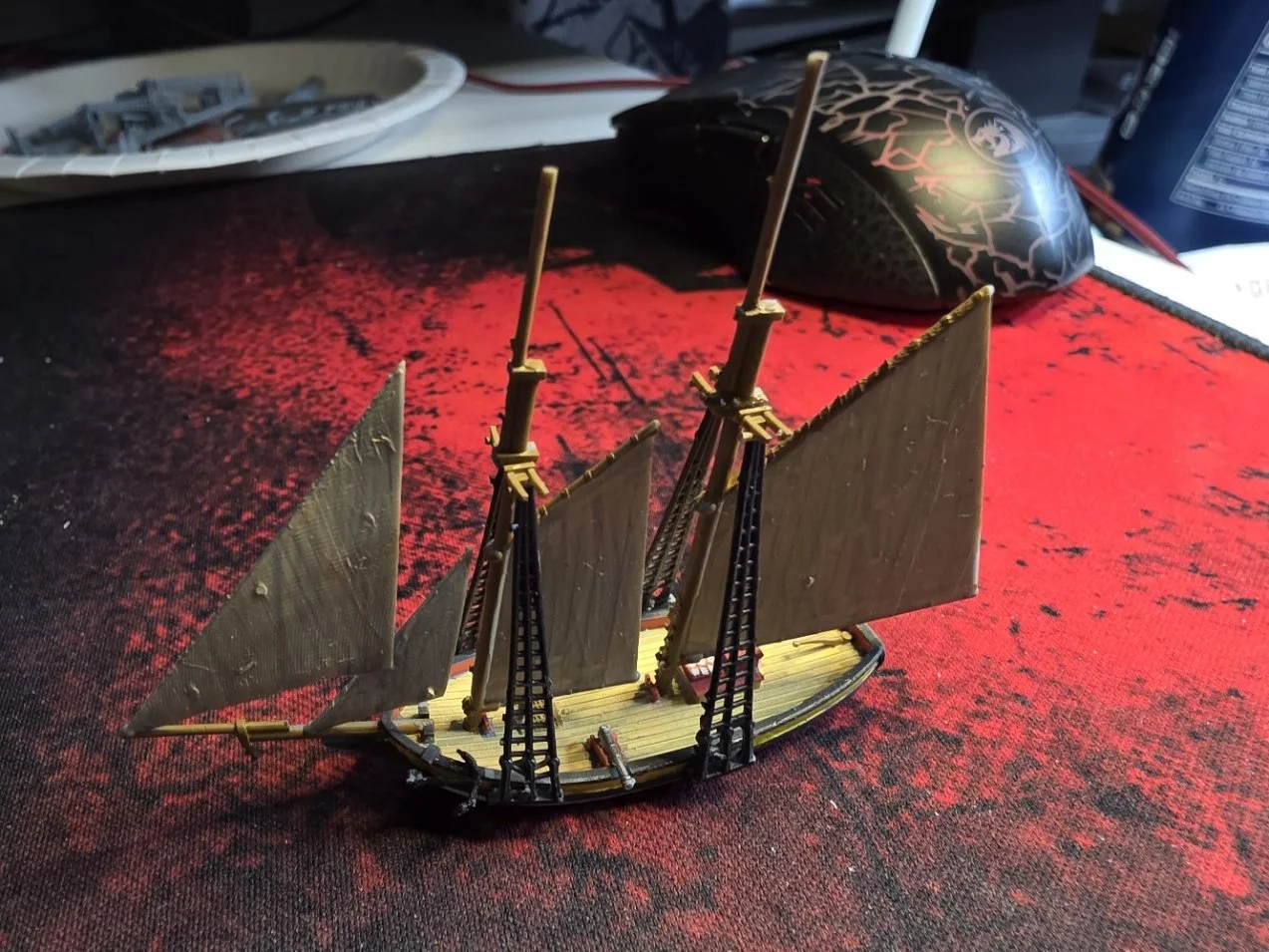
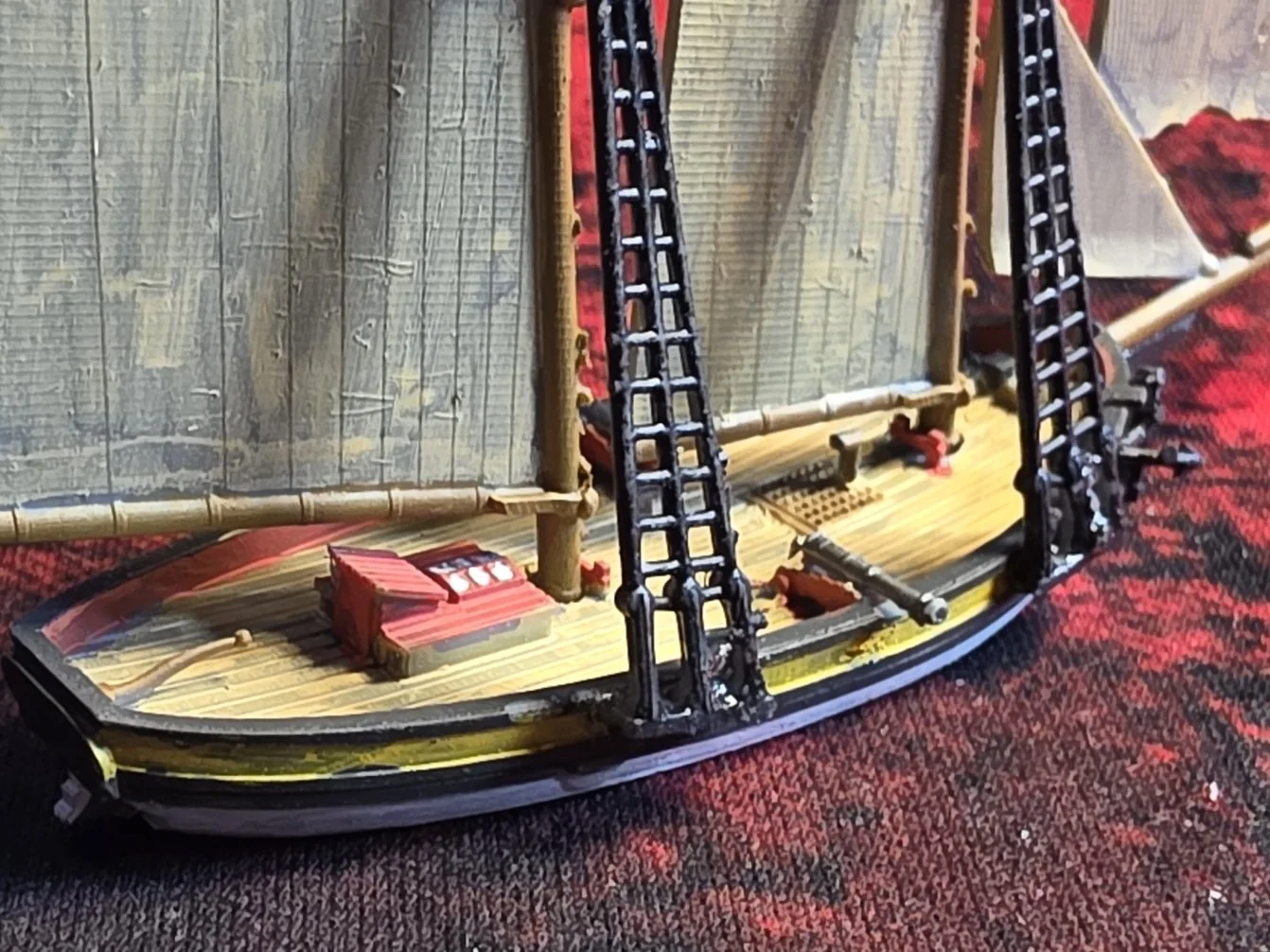
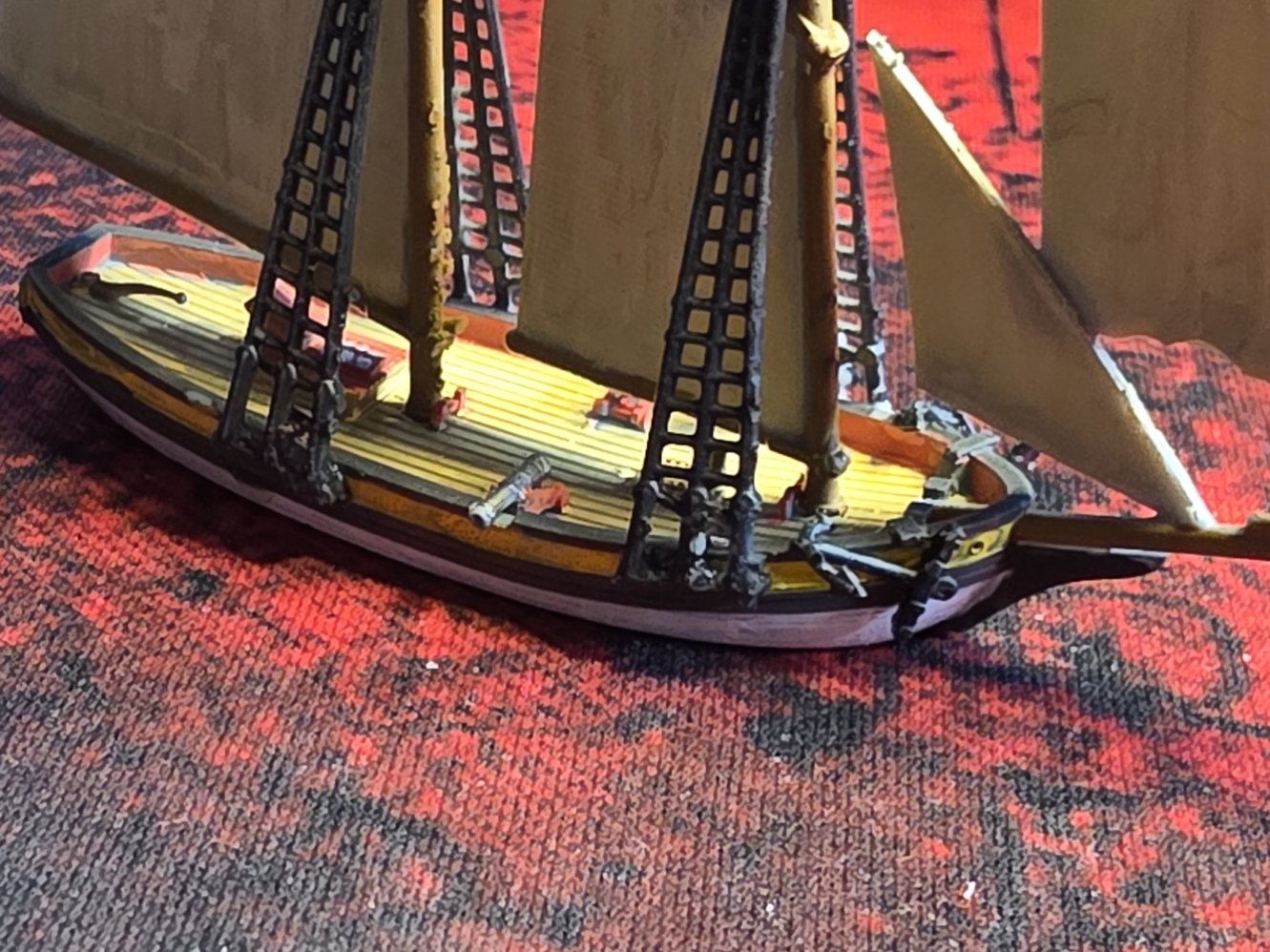
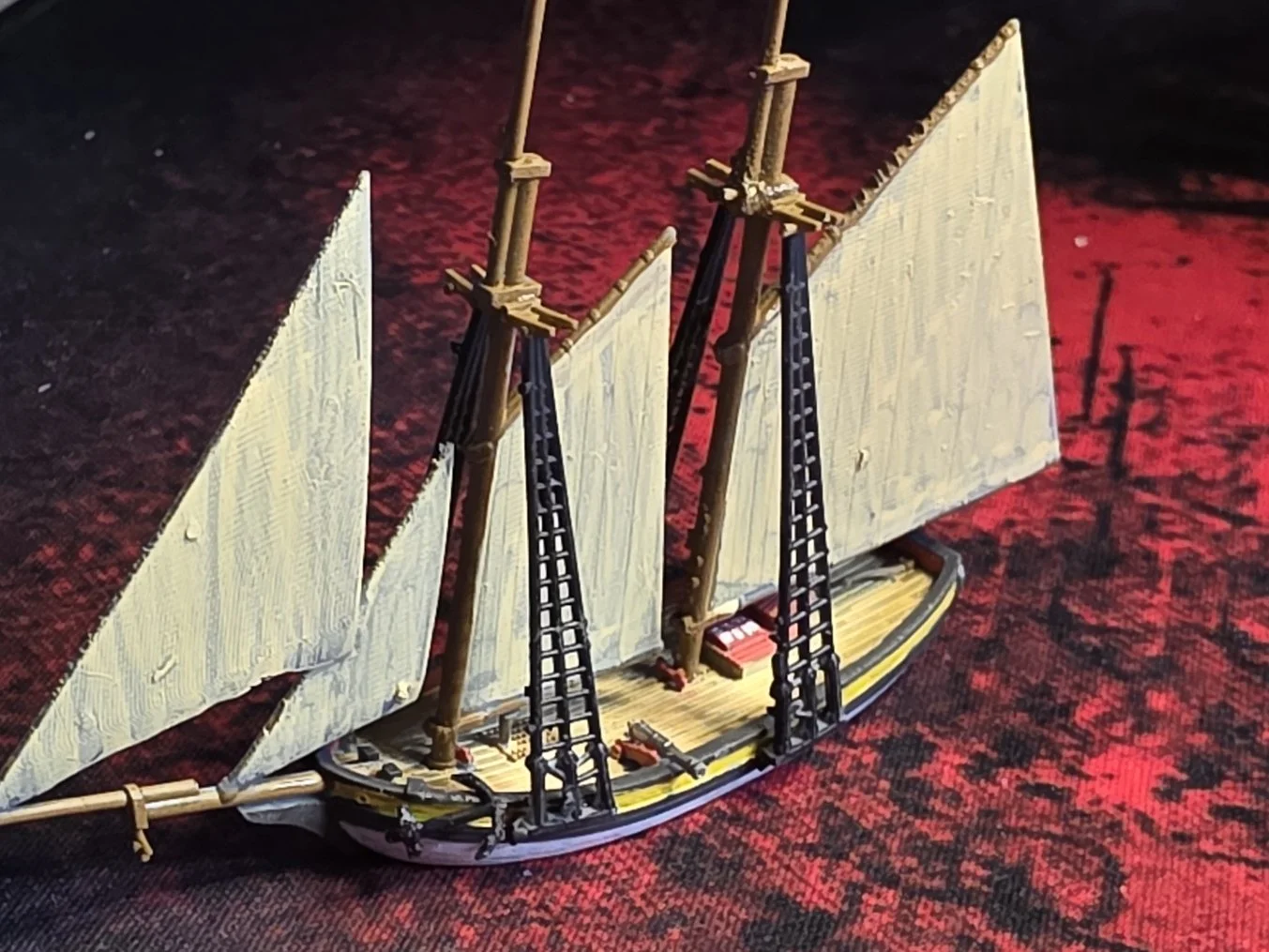
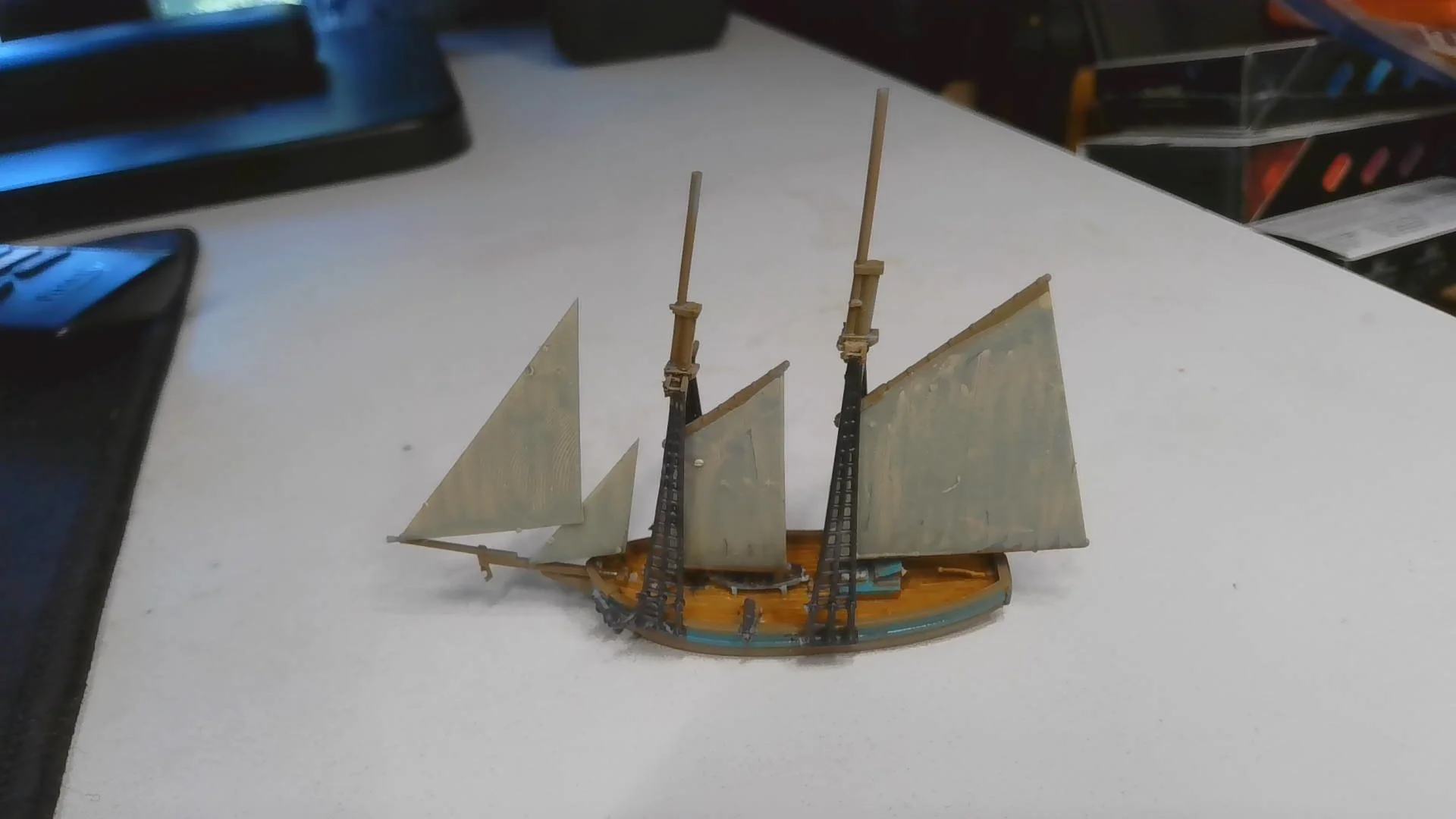
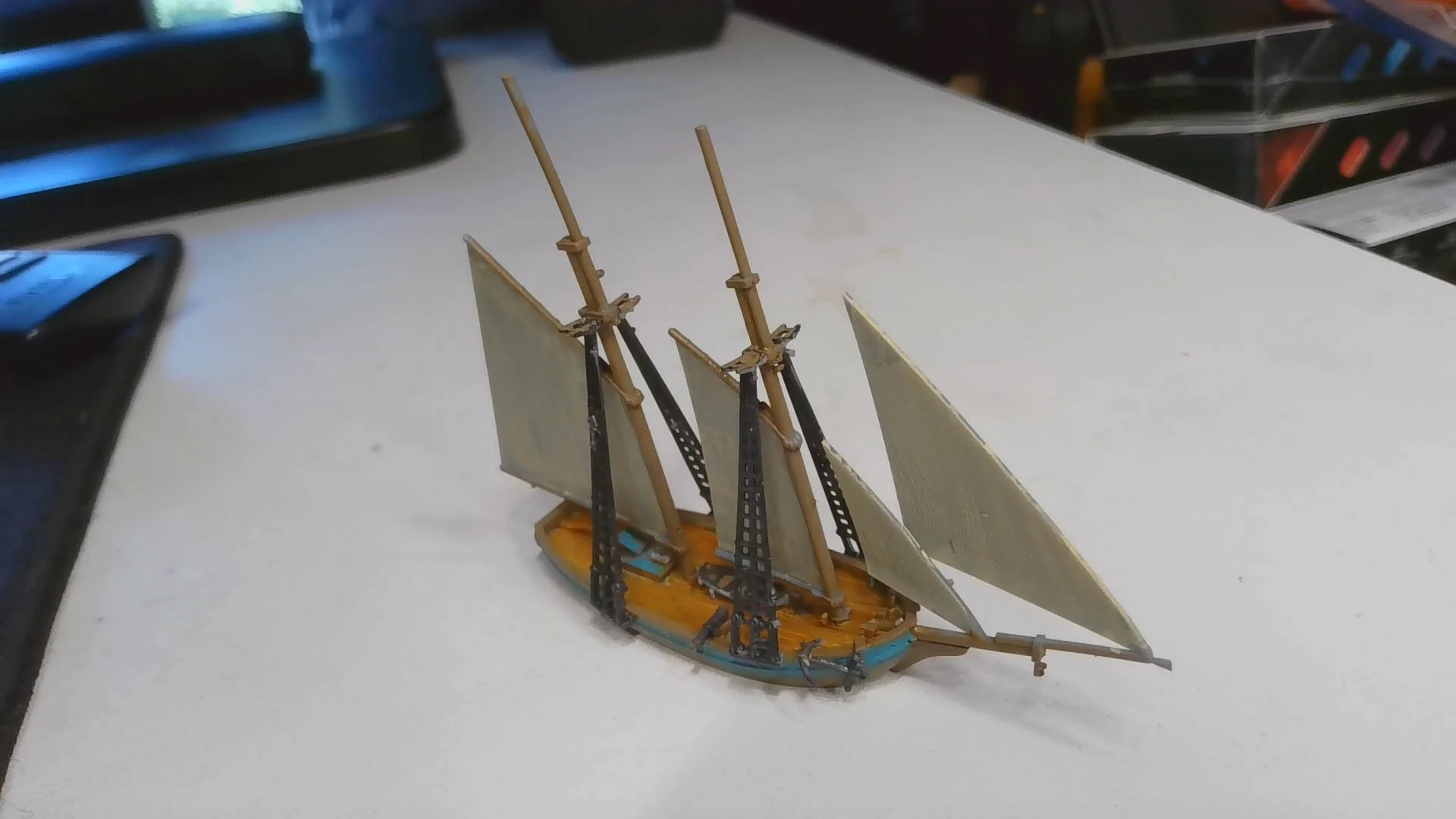
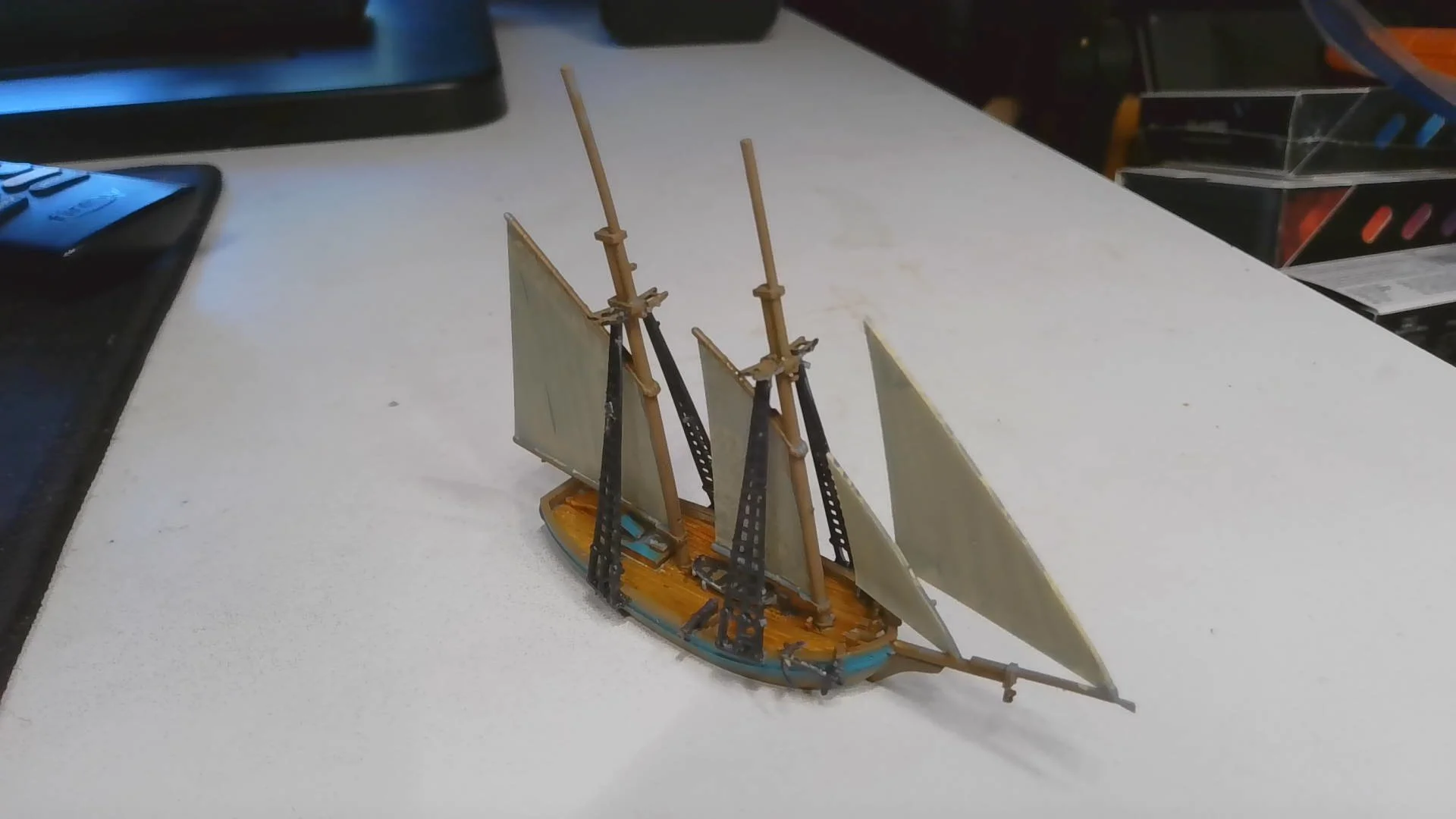
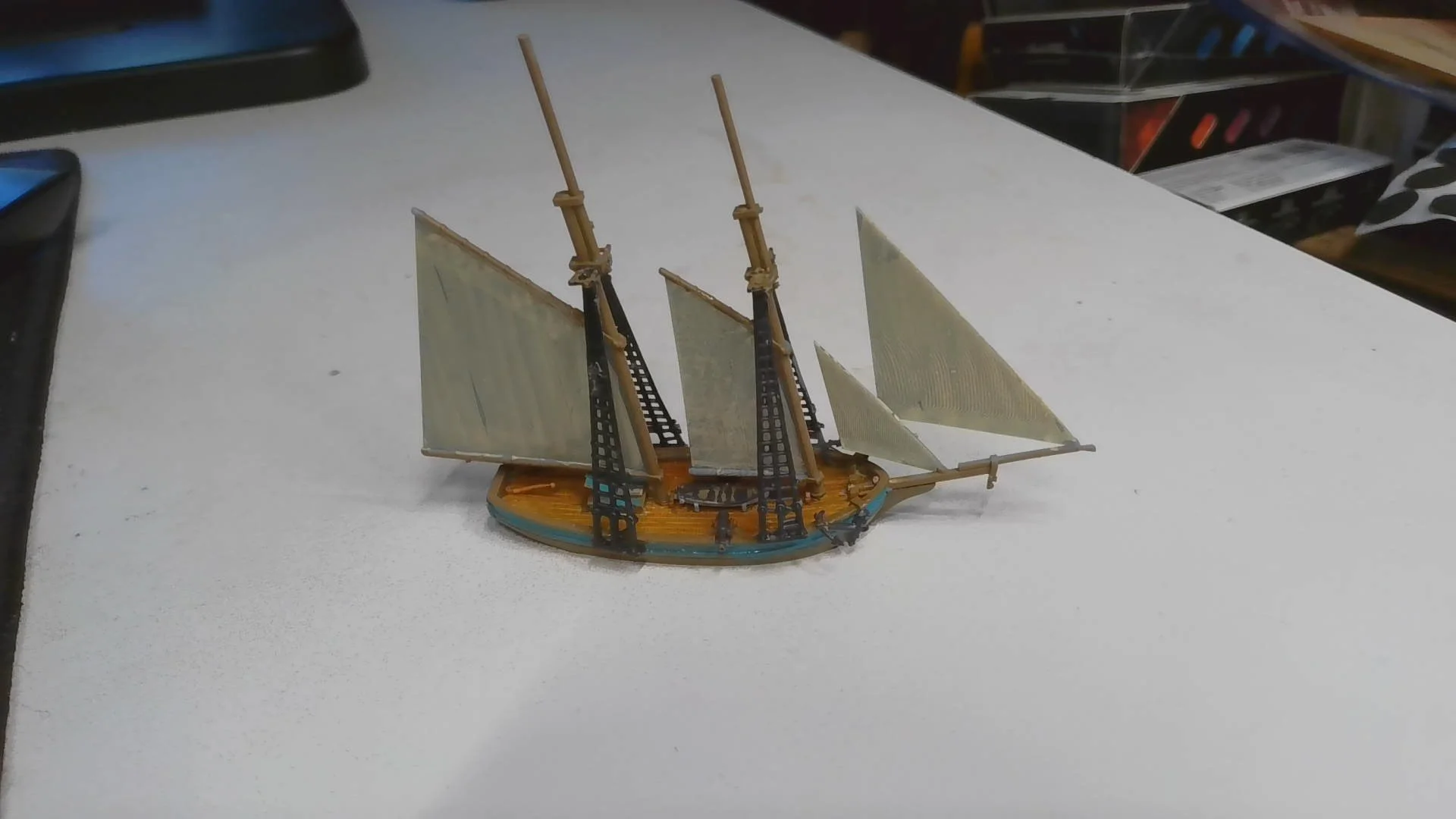
2-Gun Privateer Gaff rigged Schooner
Looking for a small privateer schooner for Sailpower or other naval gales in 6MM scale?
6MM scale Captain’s Edition : This is the latest 6MM version of this kit featuring MSLA resin 3D printed hull, masts, shrouds and sails. The kit features an improved resin that has high detail but maintains part flexibility. The goal of the Captain’s Edition is to get a model on the table for gameplay in a faster manner than previous versions. These models are sold unassembled and unpainted.
Historic ship type:
During the American Revolutionary War, the town of seaport town Salem and other new England coastal ports up into Canada had to make a hard shift from the fishing and trade into a state of war. the British nearly destroyed the New England fishing fleet and when rebuilding, an easy to build replacement was needed. Salem which was known for it’s fine merchant ships, and its fishing gaff rigged schooners and developed a new schooner design based on Dutch and or Mediterranean or Adriatic gaff rigged fishermen.
The smaller ones were often built in sheds measuring between 22 and 30 tons and averaged from 24 to 48 feet in length, had two gaff rigged masts and smaller ones had no bowsprit. Because it was developed in Essex, then a parish of Ipswich called "Chebacco," these schooners became known as "Chebacco Boats"
Smaller ones were “pinked” meaning they are pointed in shape to the stern. The Larger ones were referred to as "Chebacco Dogbodies" if square sterned. These schooners were built by the hundreds not only in Essex, but in other coastal towns as well. Chebaccos were almost always built in sheds near the dwelling of the builder and sometimes no more than a few yards from the front door. When finished, the boats were loaded onto pairs of wooden wheels and hauled to the launch-site by teams of oxen.
Salem became a center for privateering in both the American War for independence and again during the war of 1812. Privateering was a very impactful way for waring nations to impact the commerce of the enemy. During the Revolutionary War, approximately 800 ships were commissioned as privateers and collectively they captured or destroying about 600 British ships. During the War of 1812, the U.S. government again issued over 500 to roughly 1,100 commissions to private armed vessels (privateers and letters of marque). These vessels captured approximately 1,200 to 2,000 British merchant ships, significantly disrupting British trade
One of the first to do so in the war of 1812 was the town of Salem. Several captains got together and armed a fast schooner named Fame with a pair of 6-pounder cannons when war broke out in the summer of 1812. The encountered and captures a merchant ship and a brig that surrendered without firing a shot. She was arguably the first American privateer to bring home a prize, and later made 20 more captures before being wrecked in the Bay of Fundy in 1814. What Fame looked like exactly is not known. Small ships like this are not documented to the same level as larger warships. Some sources refer to Fame as a Chebacco dogbody gaff schooner, whereas the modern replica builder claims she is a fully pinked Chebacco. The modern replica also purports to depict the Fame with a pair of small swivels, which likely would not cause any enemy to strike colors and Conflicts with navy sources which site 6 pounders. While the story of this plucky schooner is captivating what is true is she was one of literally hundreds of fishing schooner, that were armed to provide a way of life for these fishing captains.
The goal of this build was to build a small gaff rigged schooner… She is sharp aft but still has a square transom, She is built to be fast, but she is is also beamy enough to mount a pair of 6 pounders. she also has a typical schooner bowsprit. It is meant to represent a fishing schooner armed for privateering.
For those interested in New England fishing schooners, Brian also designed a pair of smaller unarmed Chebacco pinked fishing craft which will be included with the Fisher’s Islands Terrain set, along with this model.