
Welcome to Sea Dog Game Studios and Valkyrie Pewter!
We are an Ohio based small independent tabletop game, pewter, jewelry, art, and design studio doing business here on the web, at gaming conventions, medieval fairs and Viking festivals and renaissance festivals.
We are the indie publisher of the Sailpower and TechCommander tabletop miniatures game systems, a maker of tabletop game miniatures, terrain, and related accessories, and a maker of the Valkyrie Pewter, and Lizards Wizards and Rings line of fine fantasy and renaissance-themed handcrafted pewter!
We run a 3D printing farm used to create many of our tabletop games products, as well as a full pewter casting shop to supply our ren fair product line. We attend a number of tabletop gaming, and wargaming shows over the year as well as Ren fairs,
So whether you saw us on social media at a game convention, at a tech conference or a ren festival, or however you found us we are glad you are here!
Brian and Elizabeth Carnes
Owners of Sea Dog Game Studios and Valkyrie Pewter
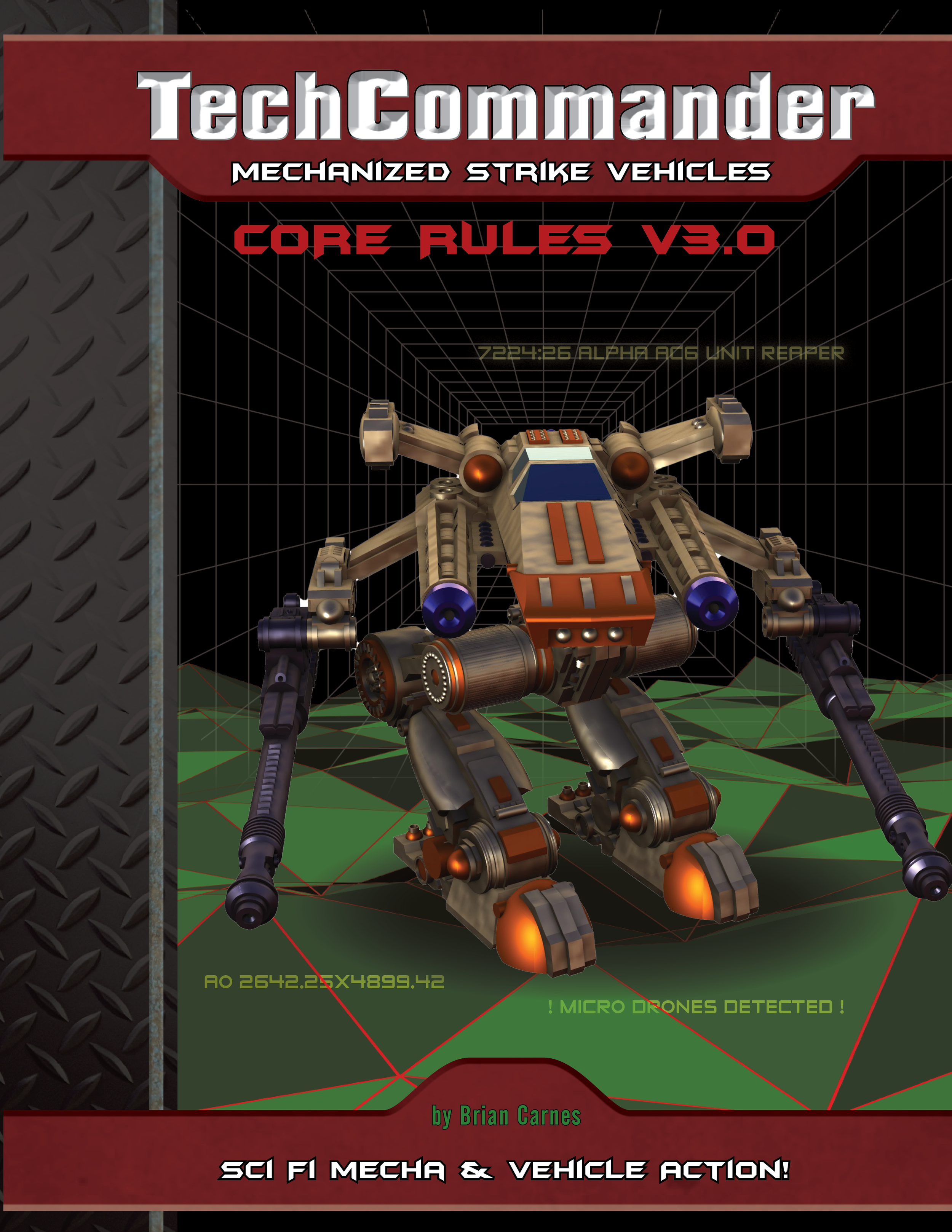
TechCommander is a fast paced, brutally lethal scifi action miniatures game designed for 2-10 player! Leave your pencils behind; this game uses fast-build system that has you in the action instead of penciling in stats. Featuring CAD designed, 3D-printed, customizable mecha that are pegged together for easy battlefield swapping. It also features a wide variety of awesome scifi vehicles and tanks for various battlefield roles.
But the action does not stop there! TechCommander also has power suited infantry enhanced with stealth systems, jump jets and cloud computing HUD displays. These guys can take down a big mecha unit with a rallied computer-synced attack. This game has strong influences from Japanese mecha, modern warfare, and the scifi action genre as well as real world next era technology.
Unleash your tactical genius! Inside this colossal 386-page rulebook pdf, you'll discover a rich universe of lore, diverse units, and all the essential mechanics to jumpstart your ultimate tabletop miniatures experience.

This Martello Tower is based off of the defensive forts built during the 19th century. Comes unpainted. We carry towers from 3mm to 28MM scales. Models are 3d printed in FDM with 2 SLA fortress guns for the roof on all models except the 3MM version. The 6MM version comes with a T-dock and a few additional world building bits
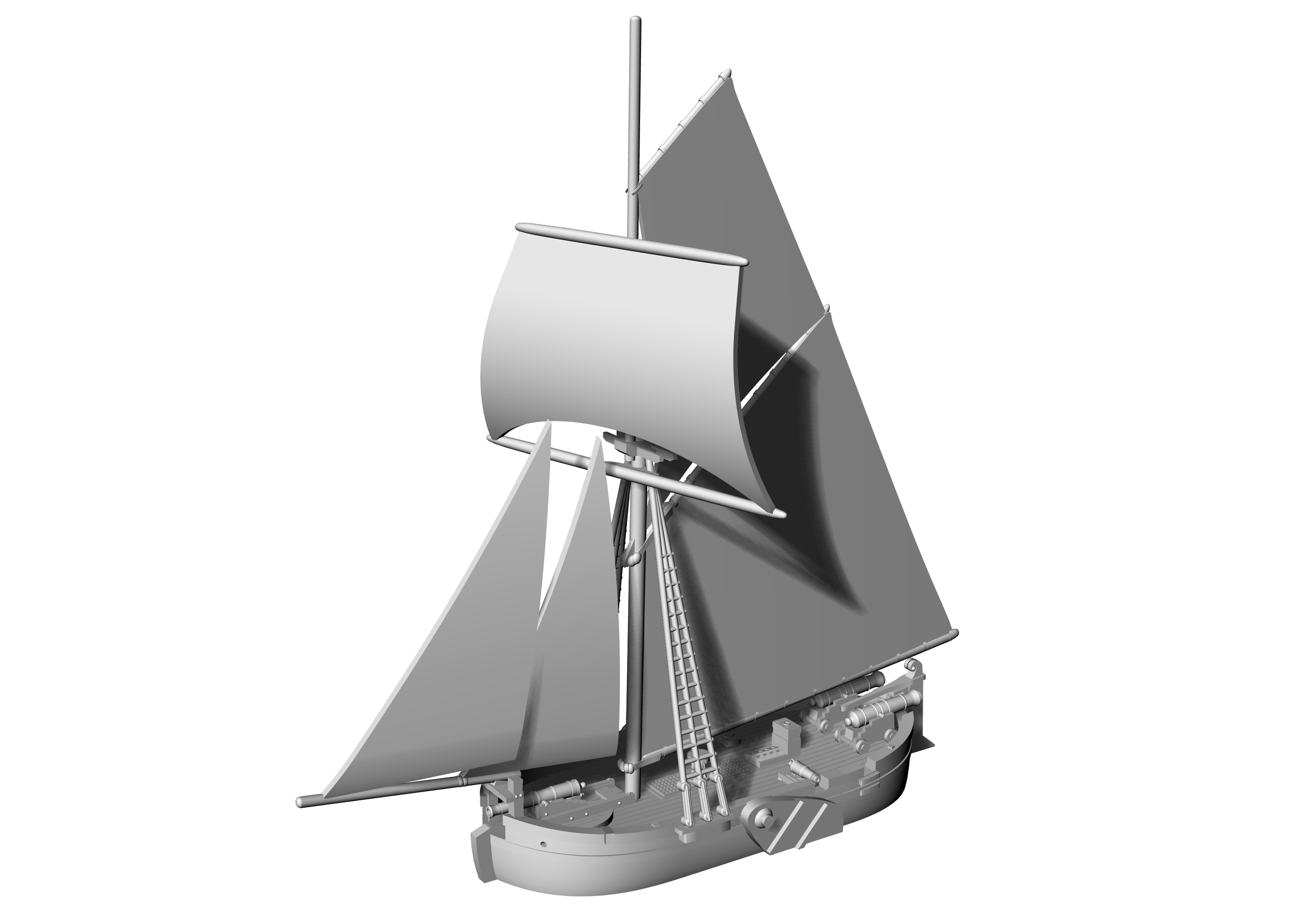
6MM scale Captain’s Edition : This is the latest 6MM version of this kit featuring MSLA resin 3D printed hull, masts, shrouds and sails. The kit features an improved resin that has high detail but maintains part flexibility. The goal of the Captain’s Edition is to get a model on the table for gameplay in a faster manner then previous versions.
6MM scale HarborMaster Edition : This is a legacy version of this kit. 3D printed in Hi Res SLA, featuring wood and floral wire mast construction. The kit comes unpainted and unassembled. This kit type is ideal for more skilled modelers who plan to rig and/or make make sail prom paper, or want to reflect the ship as it would appear in a harbor not under sail. If this version is out of stock it may be available by contacting us for a special order.
This kit comes in two versions… For later era games the Long guns and carronades versions would be ideal and you can mix in the other version for variety. For earlier era games, we offer a Long Guns and cannons version (no carronades).
Historic ship type: Dutch Navy gaff/sloop rigged gunboat modeled after Gunboat 2 which blew up and sank February 5, 1831 but is more generally intended to represent any number of period gunboats.
Design background and construction details: A gunboat is generally a small ship fitted with a single or a few large guns. The gunboat could be built quickly and due to shallow draft operate near shore to support ground forces or in a defensive capacity. They could also serve as coastal/harbor defensive vessels and be used to interdict smugglers. This gunboat is based on traditional Dutch shallow draft designs. Literally thousands of craft of this general size and shape were built for the Dutch inland/coastal cargo trade. When designing gunboats, the wide beam, relatively low freeboard and sturdy construction also made them perfectly suitable to carry large guns on deck. The Dutch navy used gunboats like this for hundreds of years with only minor changes.
Dutch gunboats such as this were quite heavily armed for their size with a 30 pound forward facing gun and two slight lighter aft facing guns. The aft guns were set up to be switchable from stern chasers to the sides. In addition, she was also fitted with mounts for 4 swivel guns. As configured in the 1800’s she likely could not manage any additional gun weight thus the switchable guns. Prior to the creation of carronades, these ships carried lighter guns thus could use all ports.
The Dutch trade ships these designs were based on were fitted with a simple sloop rig consisting of a gaff sloop main sail and a few jibs. For naval service, they were upgraded with a more complex rig that allowed her to carry more sail and react to conditions and enemy movement better. This gunboat is flat bottomed with a very shallow draft and the signature Dutch leeboards on each side, which, when lowered, provide the side force that keeps her from being set sideways when sailing to windward. While the hull is not very sleek, this tried and true design and sailed well. In civilian trade, this general design was still in use up to the early 1900’s!
This ship carried long sweeps (oars) and in becalmed conditions could still maneuver. While she had little space on deck for one she probably towed a launch that could be used to board other vessels during inspections.

This ship is perfect for bringing a small naval cutter to your tabletop naval game. This ship is intended to be a more historical spiritual successor and upgrade/replacement for a basic 8-gun flush deck sloop kit that Sea Dog Game Studios had offered for a number of years as a basic starter warship for use with the Sailpower game. This is designed so that the base stats for the flush 8 sloops could still be used, or if advanced players desire, they could play a similar ship that is a little more specific to a historical example in nature.
There are two versions available:
6MM scale Captain’s Edition : This is the latest 6MM version of this kit featuring MSLA resin 3D printed hull, masts, shrouds and sails. The kit features an improved resin that has high detail but maintains part flexibility. The goal of the Captain’s Edition is to get a model on the table for gameplay in a faster manner then previous versions.
15-20MM scale: This kit features a FDM 3D printed hull, with hi res SLA printed detail parts and wood dowels for mast and spars. Paper sails, flags and rigging may be made by the builder but are not included with the kit. The kit comes unpainted and unassembled.
Historic ship type: This ship is based largely on the cutter Sherbourne. Typical of smaller cutters of 1700’s
Cutters evolved during the 1700’s on the coastal regions in southeast England as swift channel vessels. With the massive amount of canvas, disproportionately large area of sail for their size, and a sleek hull, they quickly gained a deserved reputation for their speed, which was quickly noticed by smugglers who soon adopted the speedy cutter as the preferred smuggling craft. In turn, cutters were employed by the British Customs Service to counter smugglers. Cutters were also used by the navy for patrolling and scouting and to carry important dispatches, and military orders around to the various reaches of the English naval presence. They also were commonly used as privateers.
The Sherbourne was built as a revenue vessel for the Customs Service. She was designed by Sir Thomas Slade, the designer of HMS Victory of Trafalgar fame, and was built and launched in 1763. After over 20-years service under multiple captains, Sherbourne was sold in 1784 a remarkably long career for such a small vessel. The historic Sherbourne was 54' 6" long, 19' wide and had a draught of 8' 11". She carried a compliment of 30 men and was 85 tons. Armament consisted of eight 3-pounder carriage guns (LC) and 10 swivel guns (R). Note: Swivel guns are not included with this kit but available separately for the 15-20mm version.
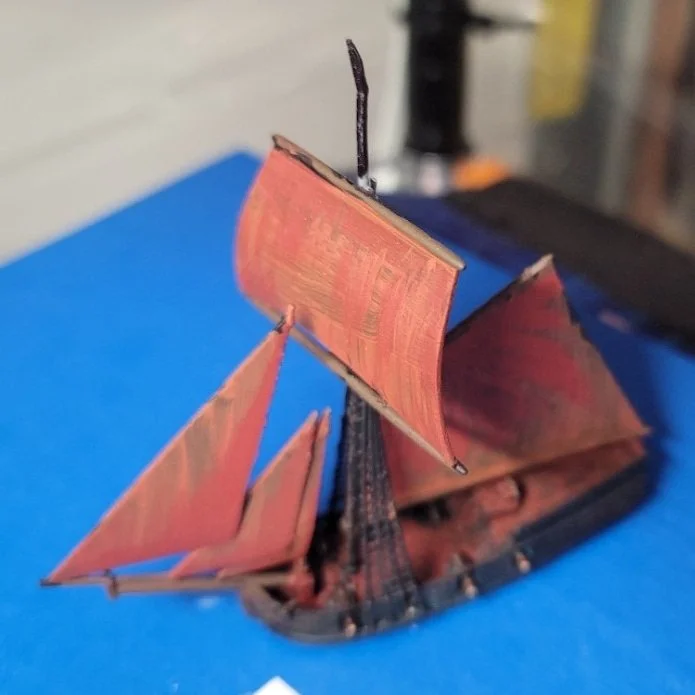
Take to the high seas with this tabletop gaming sloop! Armed with 8 cannon, this sloop represents a small, fast, but powerful ship of war! Great for representing a privateer, a pirate, or a small naval vessel. These kits comes un-painted, and un-assembled.
This kit is available two versions: The original has a more plain transom, the other is more stylized.
6MM scale Captain’s Edition : This is the latest 6MM version of this kit featuring MSLA resin 3D printed hull, masts, shrouds and sails. The kit features an improved resin that has high detail but maintains part flexibility. The goal of the Captain’s Edition is to get a model on the table for gameplay in a faster manner then previous versions. This model comes unpainted and unassembled.
Historic ship type:
Sloops originated from from small speedy vessels like the Dutch Yachts, and then evolved highly in Bermuda and the Caribbean , and along the Chesapeake bay. Sloops made excellent small warships as they sail upwind well and are small enough to operate in coastal waters as well.
Buccaneers were a community of all nations including Caribbean tribes, escaped slaves, criminals and outcasts, privateers and pirates operating in the Caribbean Sea during the 17th and 18th centuries. They originally are referenced early as 1625 on northwest side of Hispaniola after the devastations of Osorio, and their heyday was during the Restoration Era from 1660 until about 1688 -due to events in Europe, colonial governments in the Caribbean were not strong enough as locally established naval powers to suppress them. While Hispaniola was the original home of the buccaneers, Martinique for example was a home port for a large French buccaneers community.
The original term Buccaneer referred to hunters of wild boars and cattle in the largely uninhabited areas of Tortuga and Hispaniola. The meat they caught was smoked over a slow fire in little huts the French called boucans to make “viande boucanée” – basically jerked meat they sold to the pirates and privateers who preyed on the (largely Spanish) shipping and settlements of the Caribbean. Later the term was applied to the privateers themselves, also known as the ‘Brethren of the Coast.’
The yacht, a Dutch design for an armed personal craft of the wealthy and leaders of Europe, started to see wide use and progressed to the sloop. Whereas the original yachts had drop leeboards, Bermuda began progressing similar ships with no leeboards and a gaff rig. These sloops were referred to as “Bermuda rigged.”
A large Bermuda rig sloop was the perfect ship for a privateer or pirate. Sloops were fast, and able to operate in or around the coasts and inlets. This model looks to represent a large heavily armed for it’s size Buccaneer sloop, with a high bulkhead for additional crew protection.

These are small boat wreck terrain pieces for use in your game.
3d FDM printed in PLA, it comes unpainted.

Need to get your miniature fire team on the water? The RIB (or "zodiac") is the boat of choice of the navy seals, and tactical teams the world over. This miniature version is 3D printed as one piece and suited for 15 to 20MM scale figures. Due to the nature of 3D printing there is a rougher finish on the underside of this model (not visible during game play). The miniature comes unpainted. Pictured figs are for scale reference and not included.

Komet (German for comet) (Designation HSK-7) was an auxiliary cruiser of Nazi Germany's Kriegsmarine in World War 2, intended for attacking merchant shipping as a commerce raider. Known to the Kriegsmarine as Schiff 45, to the Royal Navy she was named Raider B.
After completing one successful raid in the South Pacific, she returned home. She was then was sunk in October 1942 by a British motor torpedo boat operating with a group of other MBT units and destroyers while attempting to break out into the Atlantic on another raiding mission.
This model is 3D printed (FDM) in 1/300th scale at 380mm x 50mm (15 1/4 X 2 inches). The ship comes with the hull in 2 pieces, and with all the doors crates and guns as separate pieces so you can build her as you wish with either or both sides closed or cleared for action.
We have also produced the LS2 "Meteorit" Schnellboot (fastboat) that was attached to the Komet and it is available in hi res SLA for an additional $10. Last but not least The SLA printed Arado Ar196 float-plane set features one folded (to fit into the cargo holds) floatplane and one floatplane in deploy ready configurations and is now available!

Victualing Inshore Craft, also known as a "VIC" or Steam Coasting Lighter or "Puffer." A total of 98 were built during WW2 to supply naval ships. The English Admiralty based this design off the classic coaster Clyde puffers, so named because early versions used steam engines that puffed steam due to a simple design, the Admiralty made some changes from the classic puffer, but the design was so similar many VIC's retired from military service to the puffer trade routes.
VICs were used almost anywhere naval supply services were needed. Some were shipped (as deck cargo similar to how MBT's were shipped) to overseas bases such as Malta and even to the far east (retrofitted with diesels motors) as small tankers.
The VICs were employed at Royal Navy harbors and anchorages around the coast of Britain, lightering all manner of supplies as needed. Their largely unsung work was nonetheless vital to the smooth running of naval operations.
After the war ended many VICs were sold into merchant service. Today just a few survive including VIC56 - a photo of which inspired Brian to make this sculpt.
This model is available in several scales and finishes
The 3MM 1/600 scale version is approx. 42MM long and printed in hi-res SLA
The 6mm 1/300 scale version measures 85x20mm and is available in two finish levels: FDM (standard finish) or SLA (hi-res finish)
The 15mm 1/100 scale version (well suited for 15-20MM games) measures 250mmx60mm and is printed in FDM (New for 2023!)

Kriegsfischkutter (armed fishing boat - short KFK ) were small auxiliary warships of the German navy during World War 2. They were used in coastal security service, in submarine hunting flotillas and of course before and after the war for fishing.
Crew: 18
Speed: 9.0 kts
Armed with one 3.7 cm flak, two 2 cm flak, and depth charges
During the 1920's, the politically controlled "standardization of the vehicles of the German fishing fleet" was started. The Reichsfischkutter was mostly built in wood and could be ordered affordably by private operators. In return, the vehicle had to returned to the navy during the war.
In 1942, the German Navy ordered many of these, and thus launched the largest shipbuilding series in German maritime history. The boats were built by 42 shipyards in seven European countries. Unknowingly, yards in neutral Sweden made war fishing boats for the German Navy. These orders were disguised as orders for "normal" trawlers and were awarded by the then Reich Ministry of Food. The cutters with the numbers KFK 93 to KFK 137, which were delivered completely with fishing gear, were converted into war configuration at German shipyards in the Baltic Sea region.
In 1942, Ernst Burmester Schiffswerft KG was founded for the KFK production in Swinemünde-East as a subsidiary of the yacht and boatyard Burmester from Bremen-Burg. They built about 411 cutters. but many ships remained unfinished in different stages of construction.
Also built were: 12 cutters in Greece, 27 cutters in Varna (Bulgaria), 3 cutters in Constanţa (Romania), 12 cutters in Kherson (Ukraine), 22 cutters spread across six shipyards in Belgium, 29 cutters distributed across 12 shipyards in the Netherlands, and 44 cutters distributed to 17 shipyards in Sweden. (Total: 143 pieces without post-war production)
Completed and put into service were 612 ships, of which 554 came to the front line, of which at least 135 sank. The cutters were assigned serial numbers KFK 1 to KFK 1072. These are not to be confused with the names of the ships or changing tactical or other markings, such as the unit numbers of the Navy, radio characters or later fishing license in addition to the name.
We are offering two versions of the KFK: the naval version reflects the ship in military service, and the civilian version shows it as it would appear in commercial fishing service.
This model is available two finish levels: FDM is lower cost, and is what most would recognize as traditional 3D printing. This type of model printed in layers, and is lightweight with reasonable detail but will have visible striation (or lines) that the hobbyist may want to clean up using putty, primer, or other hobby techniques. SLA is a laser cured photo-resin that has exceptional detail, and generally has a much smoother finish without significantly noticeable striation. This type of model is more expensive material, and is more delicate.
6mm, 1/300 scale

Harbor tugs -every port, dock and harbor needs at least a couple! This 1/300th model represents a 84 footer. Available in two variants -bumpered with tires and a "bow pudding or "beard", or without so one can outfit it as they see fit. Perhaps an tug for your favorite faction? Or a rescue tug? This model measures 84MMx24MM, and is available in two finish levels FDM (standard finish) or SLA (hi-res finish).
Recreate the High Adventure and Glory of The Age of Sail!
Are you the master of all commanders? Are you the scurviest of sea dogs? Have you ever secretly felt you’d have made a great pirate or could have defeated the great sea captains in a ship to ship duel?
Sailpower is a miniatures game that allows the players to take on the role of a captain in the Age of Sail. Command small ships, large ships or even a whole squadron. It’s your call! Battle other ships, or embark on a mission seeking plunder and riches while giving your enemies the slip. Sailpower is a complete system designed to support fast paced sea action, exploration and adventure. You can play Sailpower on a small table with a couple of ships, a big table with many ships, or even a floor battle with your ?sea? covering the whole room!
Expanding the Great Adventure!
After 2 years of revisions and development, this second edition Sailpower rule book contains:
A fully revamped layout including revised and improved rules.
New gun types including light cannons, medium long guns and more types of shore batteries.
Expanded rules for small boats, forts and shore batteries including more effective hot shot!
Over 150 ship templates, including many historical ships from the Napoleonic, Revolutionary War, Golden Age of Pirates, War of 1812 eras (including ships from the Battle of Lake Erie).
Several versions of certain historical ships are provided to represent different points in the life of the vessel, such as when they first launched, when they were refitted, when they were up-gunned or captured.
All new expansive faction rules for many sea powers including the East India companies, the Dutch Navy, the Barbary Coast Pirates, and much more!
New rake rules, often player requested, add to the crossing the T maneuvering advantage.
New expansive port and tavern rule system, allowing players to recruit, buy and sell cargo, sneak into an enemy port, and even get into a bar fight!
A full exploration and treasure system allowing players to use shore parties to search various locales on the play-surface and find and or fight for all sorts of hidden goodies such as ship upgrades, exotic cargoes, additional crew, repair materials, stranded travelers, and epic treasures!
This Starter set includes:
- Sailpower 2.0 Deluxe edition rulebook (color)
Want the rules in a pdf?