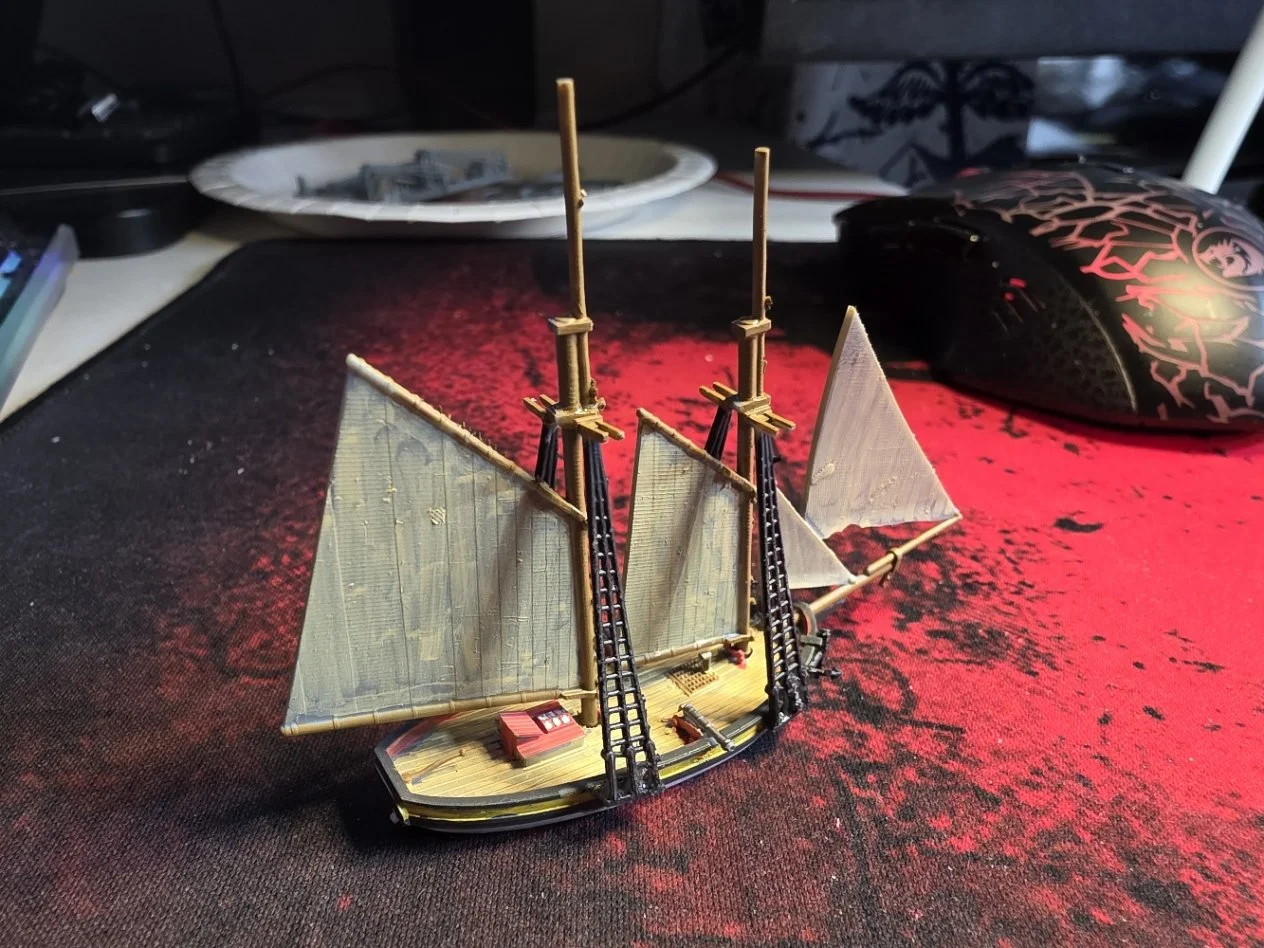
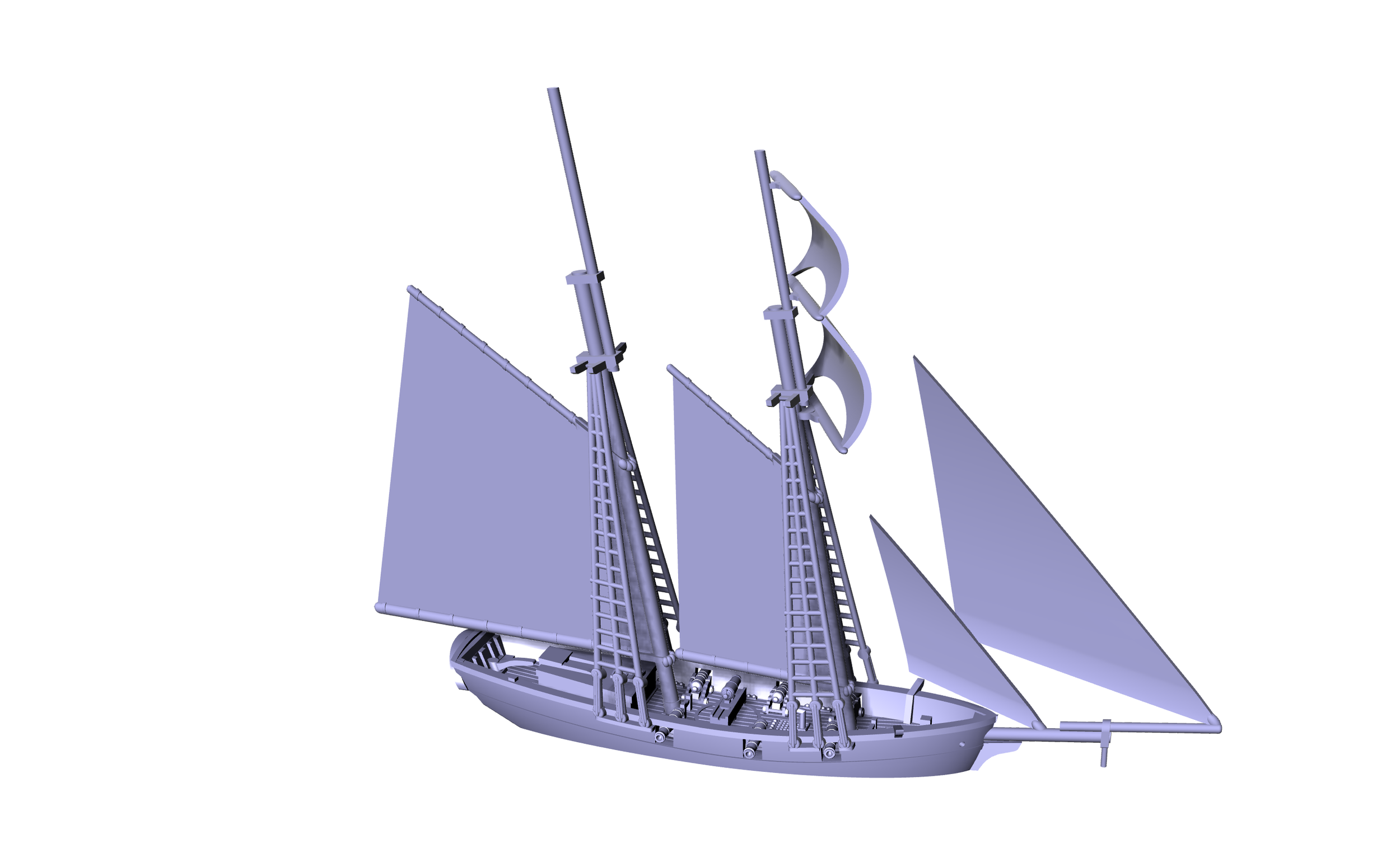
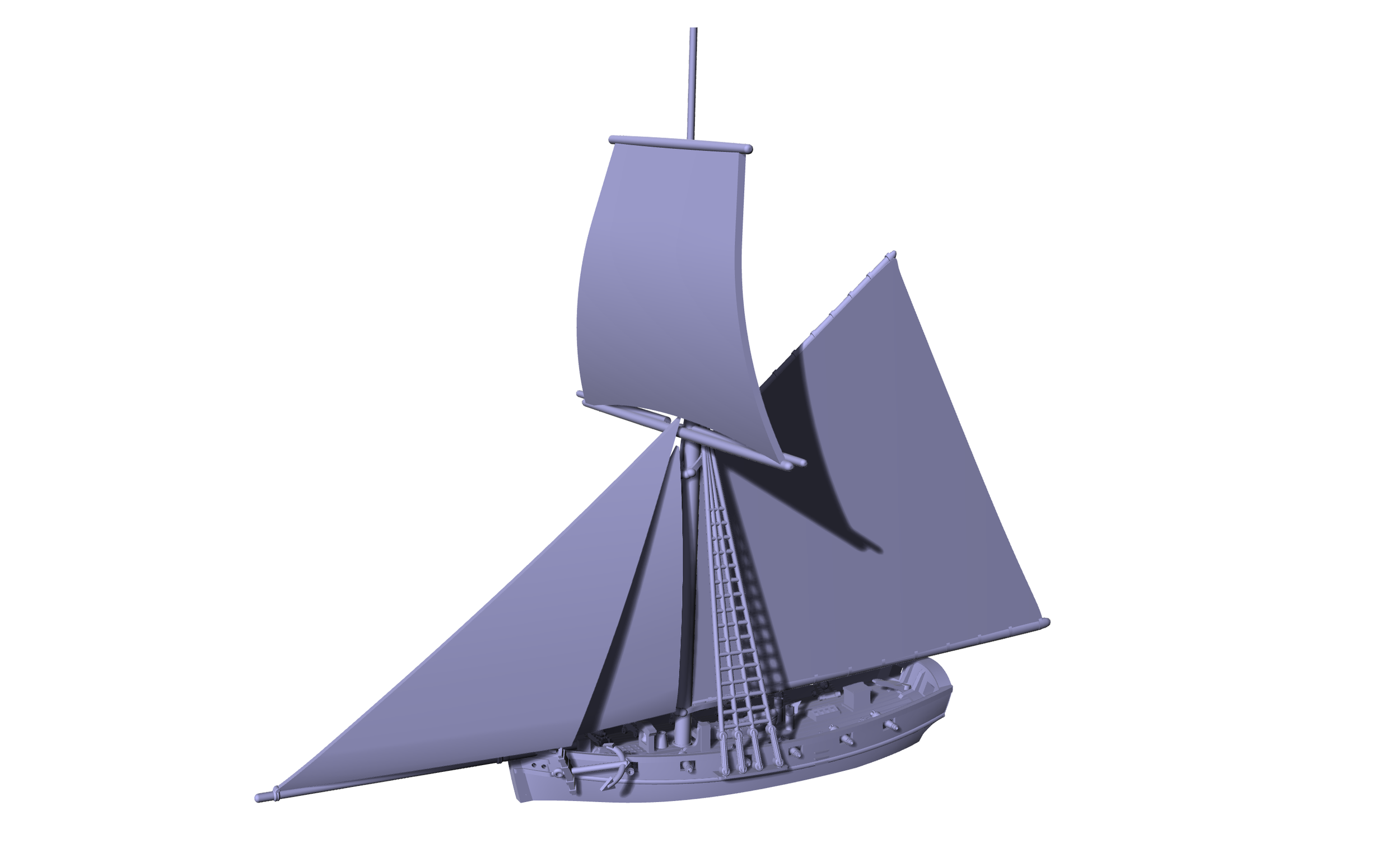
US Navy 1-gun Schooner (after USS Tigress of the Battle of Lake Erie)
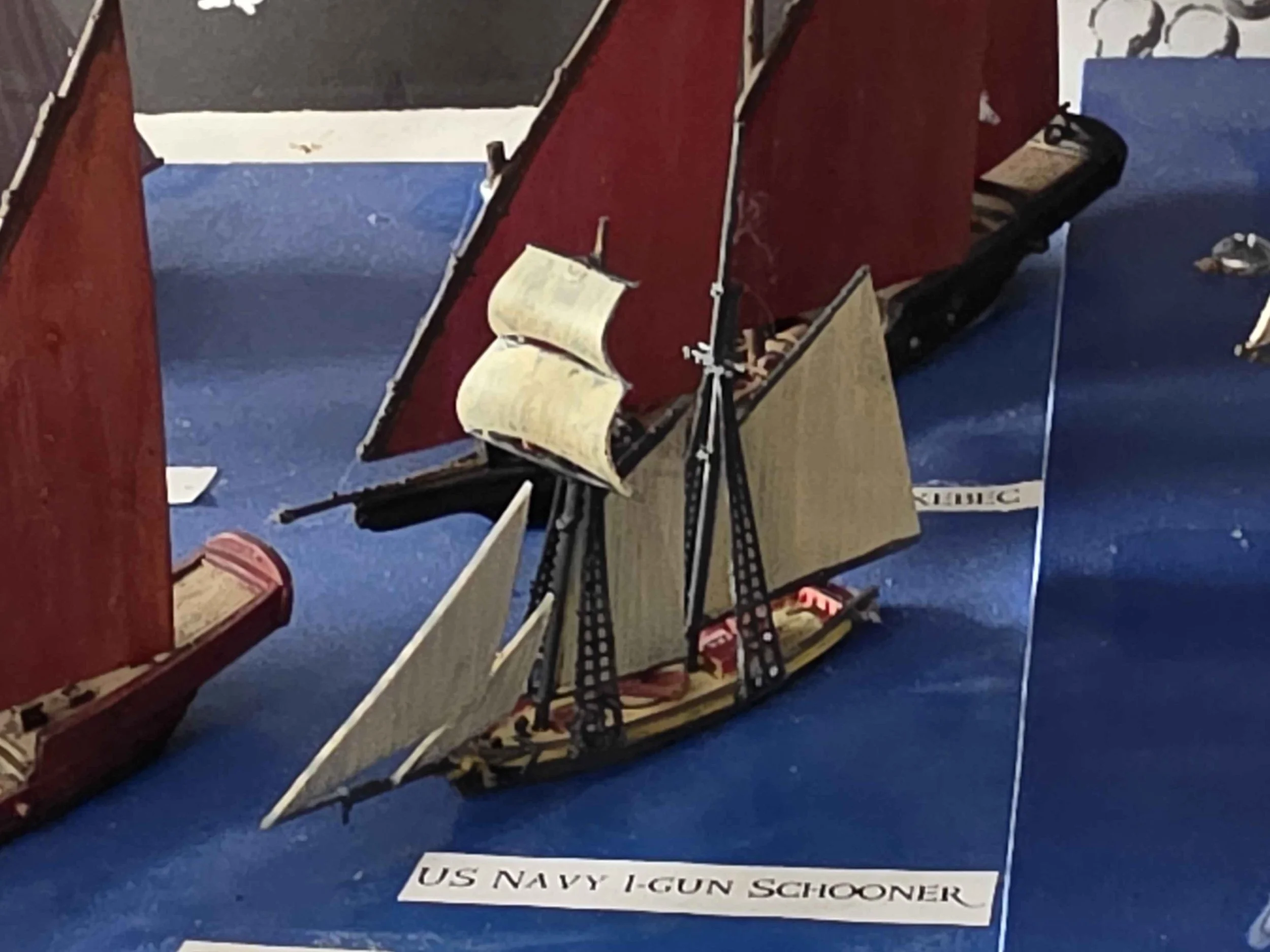
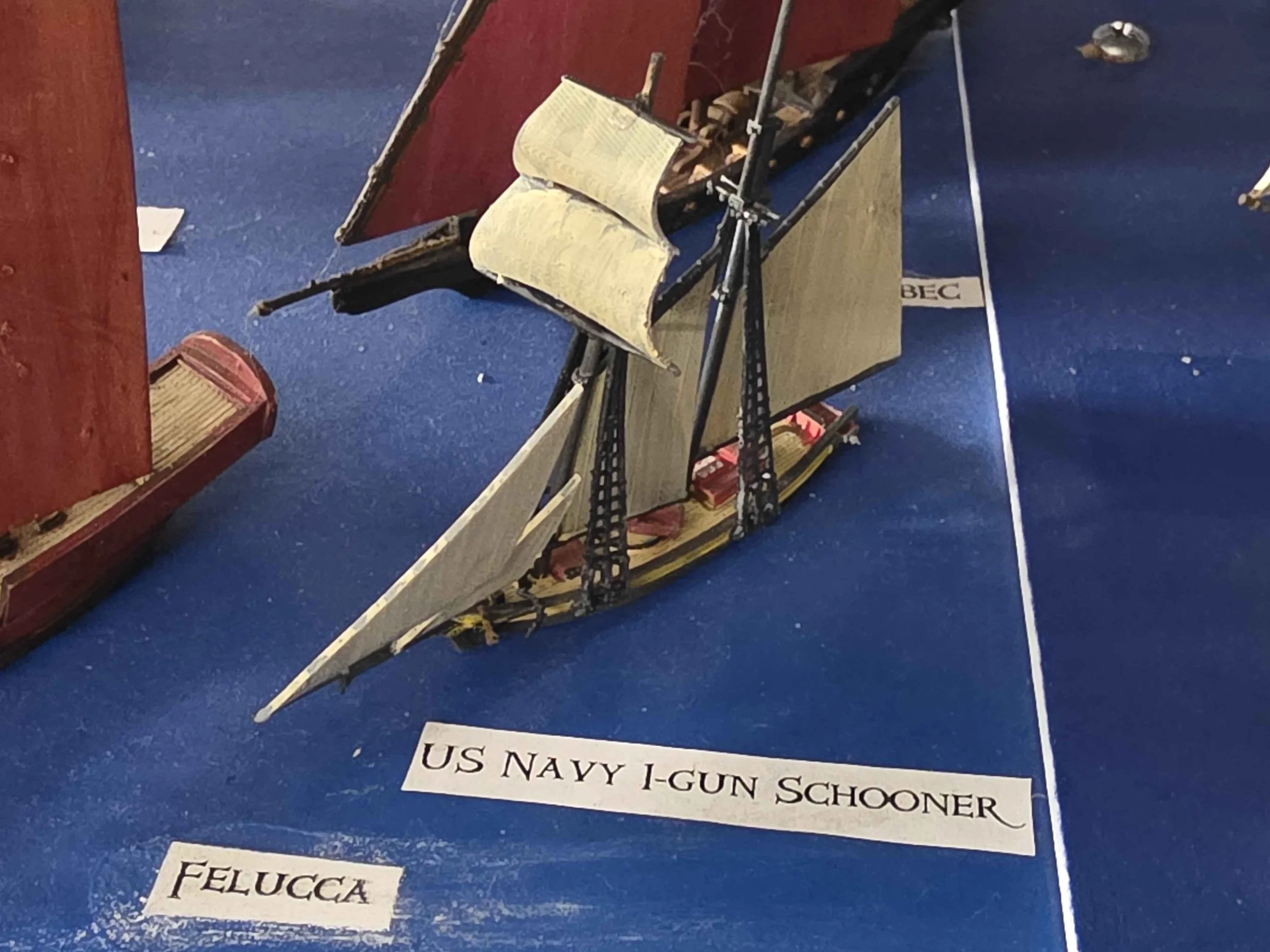
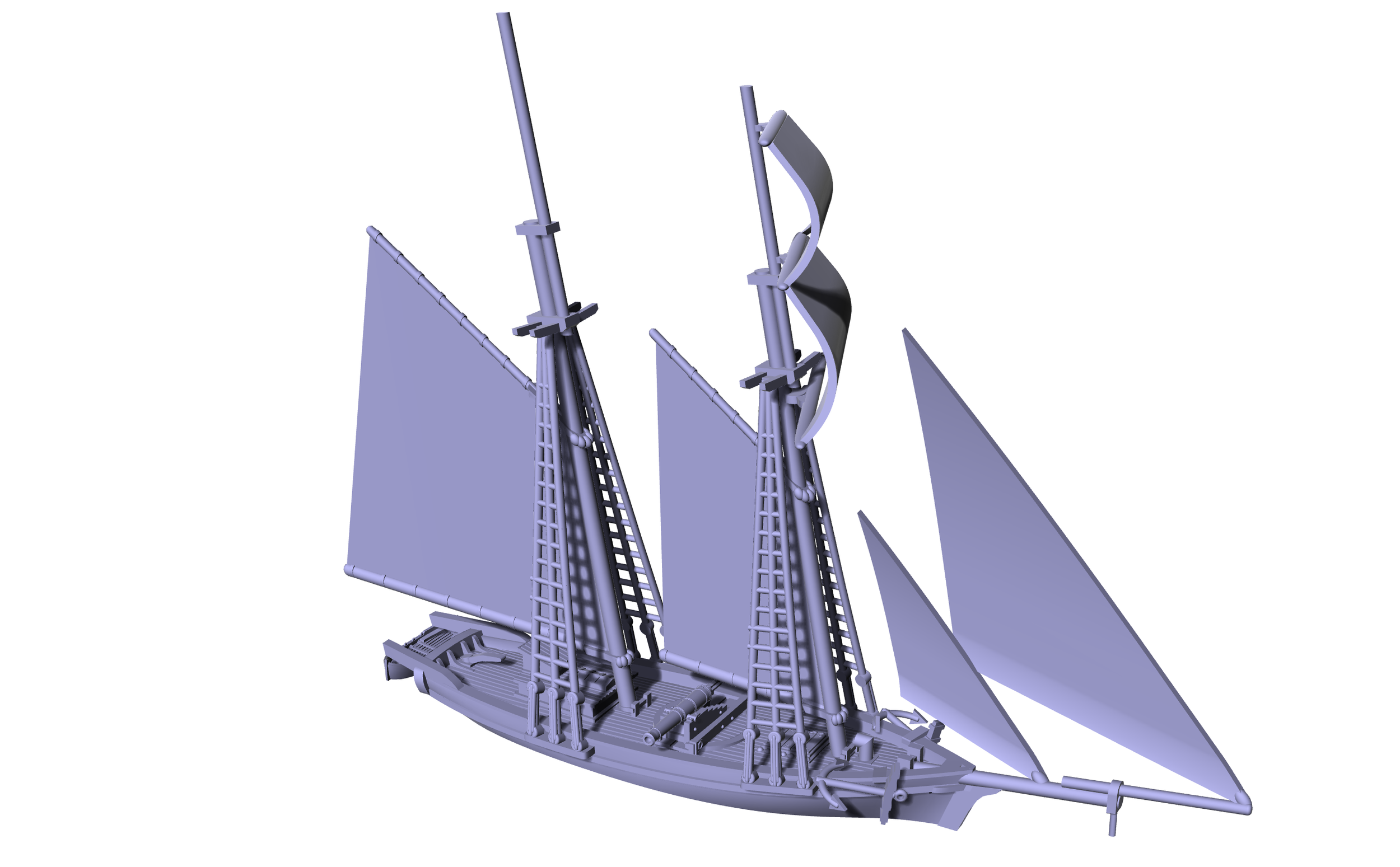
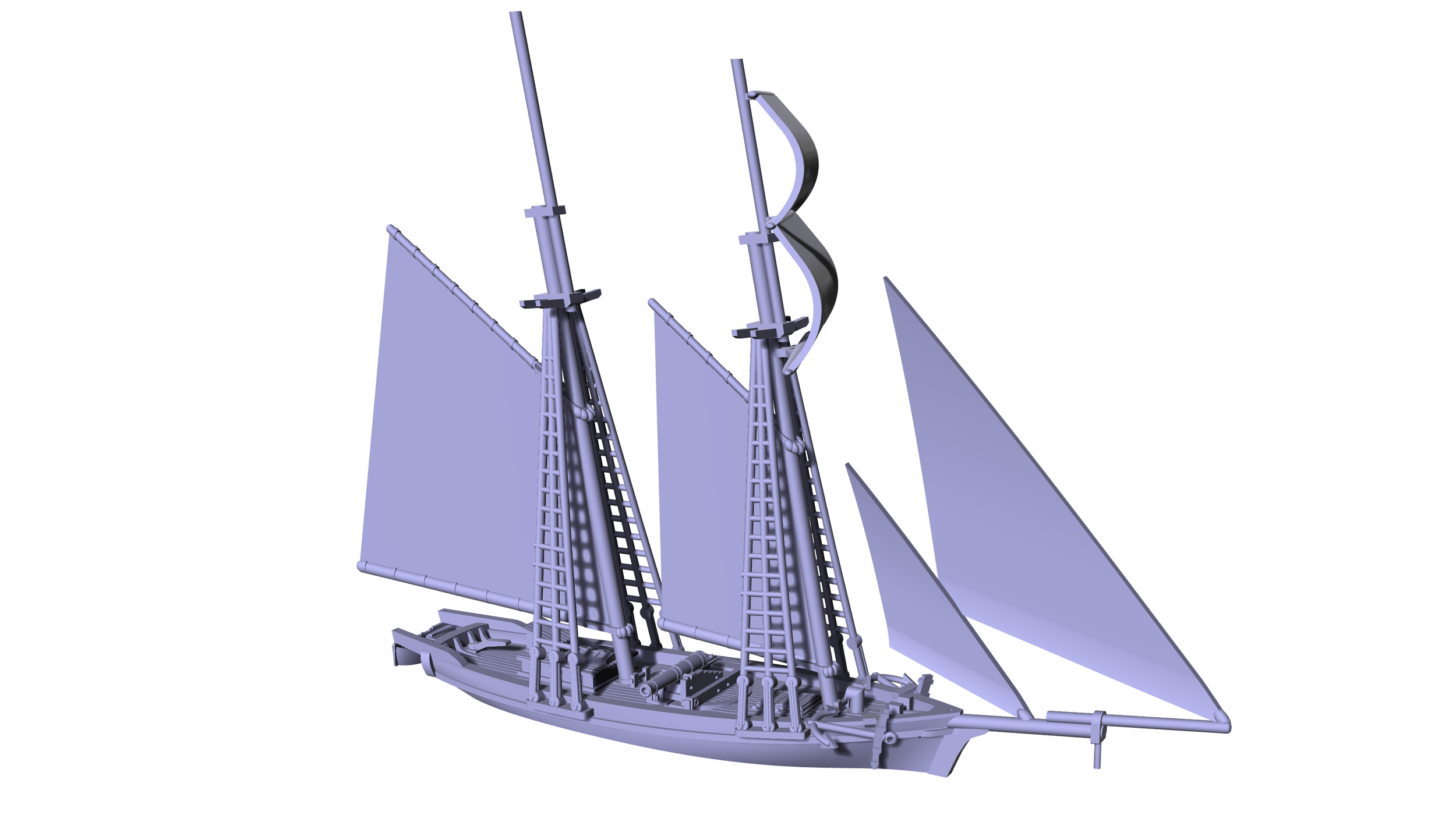
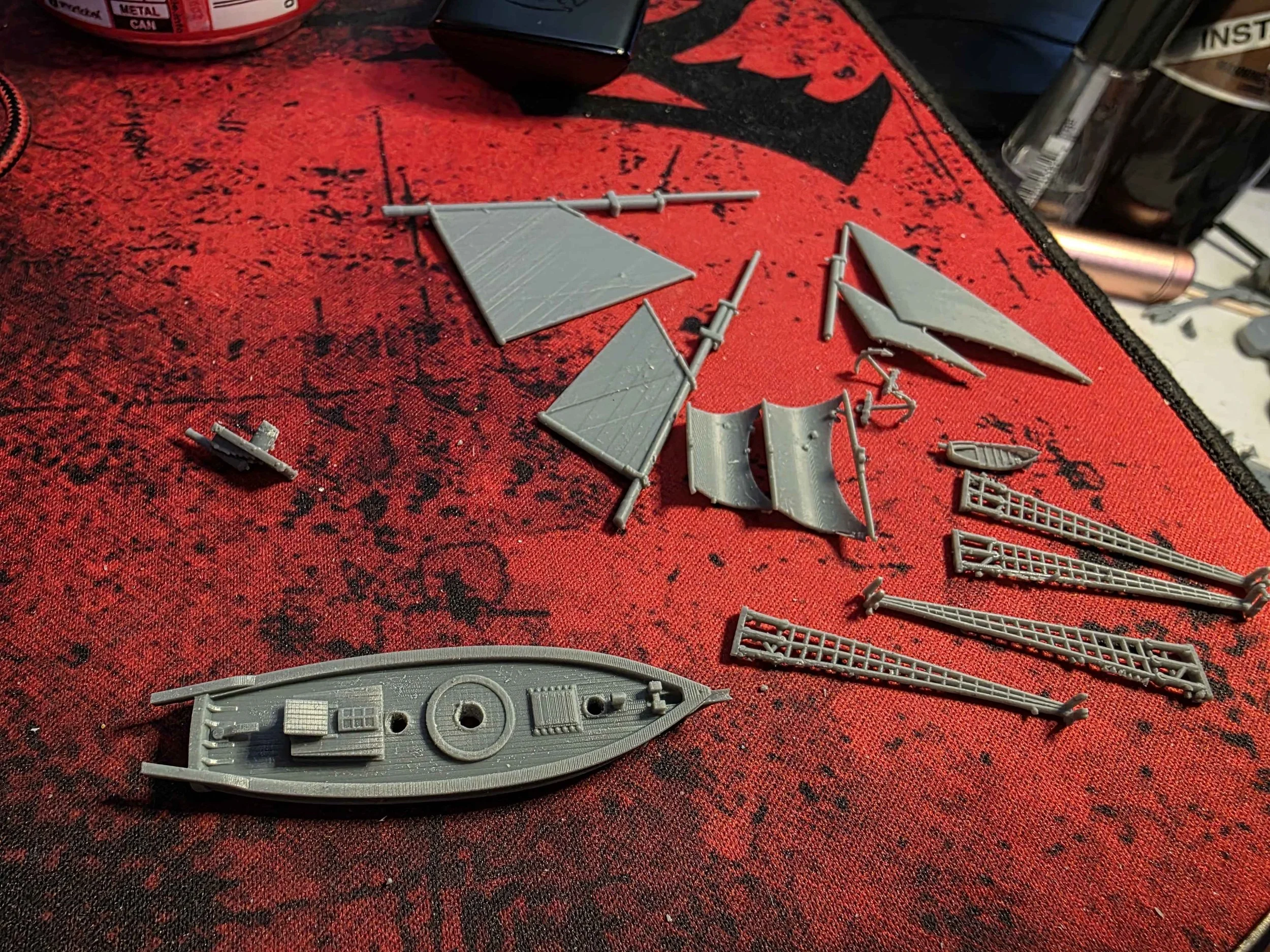
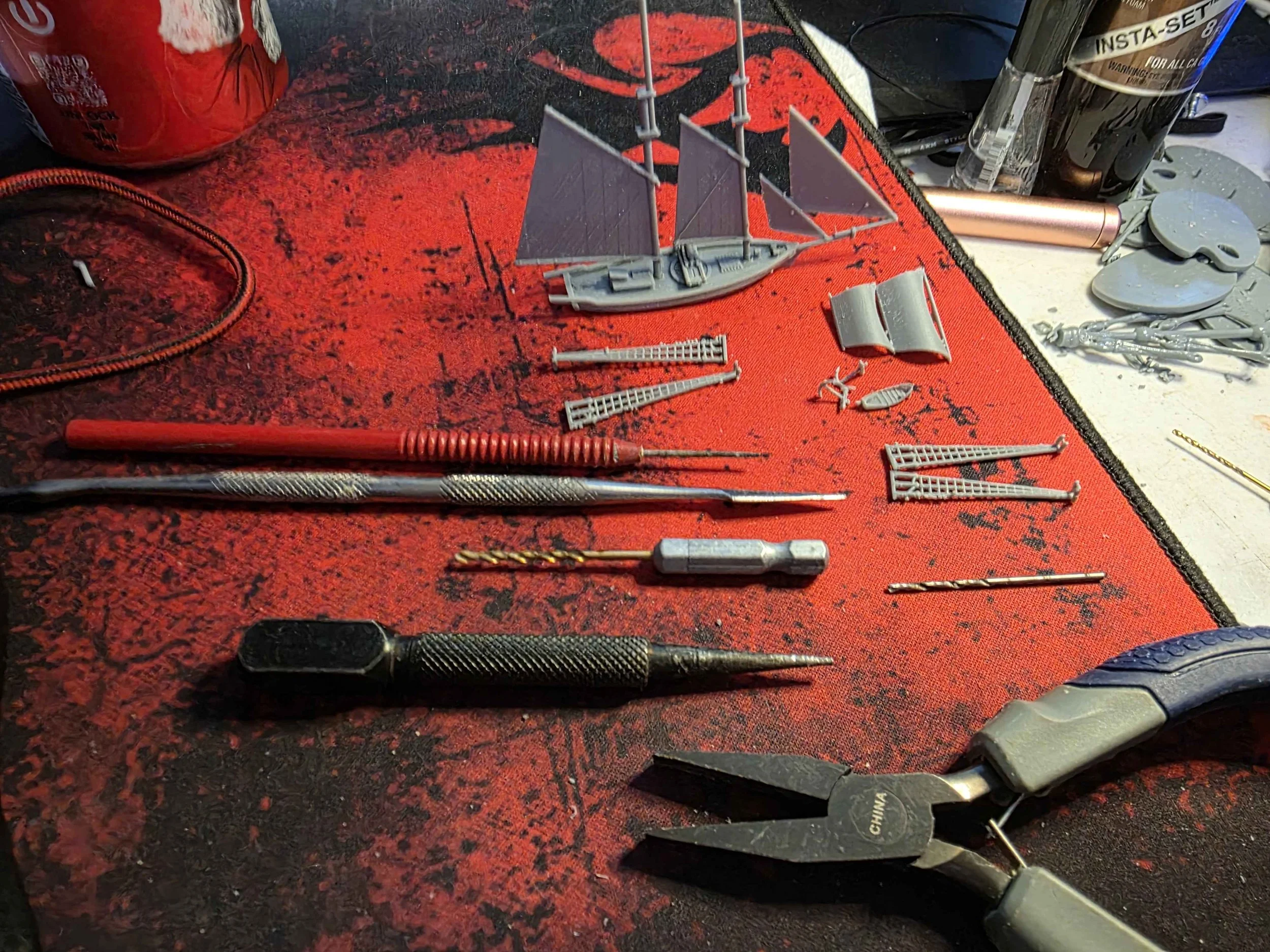
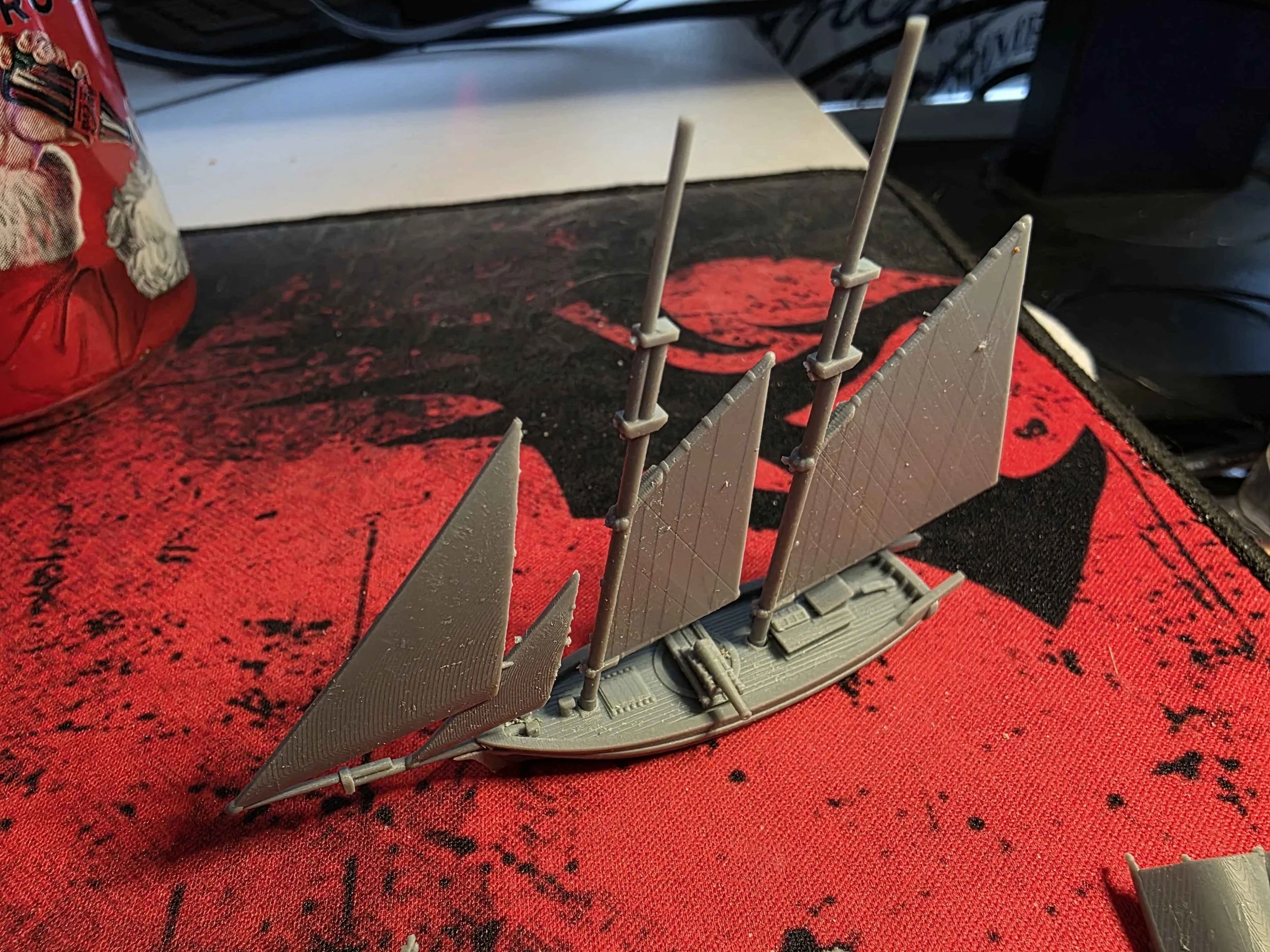
US Navy 1-gun Schooner (after USS Tigress of the Battle of Lake Erie)
Take to the tabletop seas with this small schooner with a massive cannon in 6MM scale, suited for Sailpower or other naval age of sail games. Schooners like this served as customs cutters and coastal and naval gunboats. Sailpower designer Brian Carnes (SeaDogBrian) has been fascinated the battle of Lake Erie with since childhood, and hopes to eventually build all ship present at the battle. USS Tigress was a schooner of the United States Navy. USS Tigress started as a merchant schooner, was purchased and reworked then fought in the Battle of Lake Erie in 1813. A year later in September 1814, the schooner was captured by the British and subsequently served in the Royal Navy as HMS Surprise. Small schooners like this operate well as wolf pack like squadrons.
6MM scale Captain’s Edition : This is the latest 6MM version of this kit featuring MSLA resin 3D printed hull, masts, shrouds and sails. The kit features an improved resin that has high detail but maintains part flexibility. The goal of the Captain’s Edition is to get a model on the table for gameplay in a faster manner then previous versions. This kit comes un-painted, and un-assembled.
Historic ship type:
Built at Erie, Pennsylvania, by Adam and Noah Brown, as the schooner Amelia. She was launched in the spring of 1813, probably in April. The ship was then acquired by the Navy for service with Master Commandant Oliver Hazard Perry's forces on Lake Erie, it was renamed Tigress and was placed under the command of Lt. Augustus H. M. Conkling.
During the Battle of Lake Erie at Put-in-Bay on September 10th, 1813, Tigress was one of several gunboats which caused heavy damage to HMS Detroit, the flagship of British fleet.
On September of the following year, USS Tigress and USS Scorpion were patrolling between Manitoulin Island and the Straits of Mackinac. To break the blockade, four boatloads of British soldiers, sailors and native warrior allies set out from Mackinac Island on the night of September 3rd, 1814. They snuck up on, and boarded the schooner. A fast but fierce bloody battle followed and although "warmly received" by the vessel's crew, the British captured the ship in five minutes. "The defense of this vessel," wrote Lieutenant Miller Worsley, in command of the attackers, "did credit to her officers, who were all severely wounded." (This included the vessel's commander, Sailing Master Stephen Champlin.)
The surviving crew were sent ashore as prisoners of war, Worsley retained the greater part of the boarding party on board and kept the ship's American flag flying as a ‘ruse de guerre.’ USS Scorpion arrived on September 6th, and anchored some two miles distant. Worsley, in a bold move, ran the captured Tigress alongside Scorpion and captured her, too. Both American vessels and their captured crews were later taken to Mackinac.
The British renamed their prizes soon thereafter. Tigress became HMS Surprise, an appropriate name in view of the nature of her capture, and Scorpion became HMS Confiance. Both served the Royal Navy on the lakes until the end of the war, then were laid up and later allowed to sink at their moorings in the Grand River.